
Free · from the FCW Officials app
Officials tools
Rule Lookup, Quick Reference, Signal Cards, the Overtime Cheat Sheet, the Glossary and Ask Dale, the same as in the FCW Officials app. See all tools.
Rule Lookup
Browse by rule
FCW study summaries, not official rule-book text. NFHS rules content used with permission. When in doubt, follow the NFHS rules book and your state association.
Quick Reference
Clock defaults
Periods
Varsity: three 2:00 periods. Reset goes back to 2:00.
Overtime
Sudden victory 1:00. Tiebreakers 1 and 2: 0:30 each. Ultimate tiebreaker 0:30.
Injury, blood, recovery
Injury 1:30. Blood 5:00. Recovery 2:00.
Printable sheets
Signal Cards
Signal illustrations are NFHS, used with permission. Wording is FCW study language.
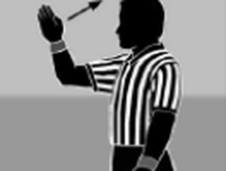
1. Starting the match
Wrestling is allowed to begin.
Set both wrestlers, then blow a short whistle and show a start motion they can both see. Do not start until they are still and you are ready to move with them.
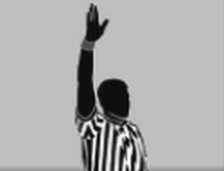
2. Stopping the match
The action and the match clock stop.
Blow the whistle and give a clear stop so the timer, the table, and both benches know the clock is dead. Turn enough that the table can see the signal, not only the wrestlers.
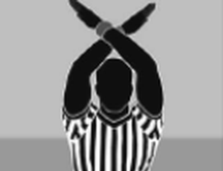
3. Time-out
This stop is a time-out, not a restart.
Stop the match first. Then show time-out so the timer does not treat it as injury, blood, or a quick restart. Say it if the gym is loud.
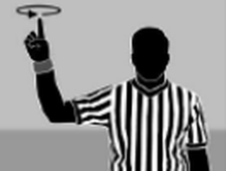
4. Start injury time
The injury clock is running.
After you stop the match for an injury, signal the timer to start injury time. Keep watching the wrestler and that clock. It is not the match clock.
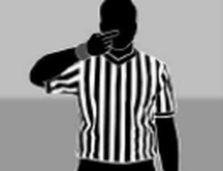
5. Start blood time
The blood clock is running.
Stop the match, then signal the timer that this stop is blood time. Do not restart until the bleeding is under control and the uniform is fit to wrestle in.
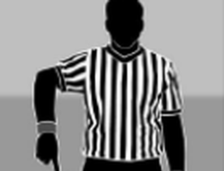
6. Start recovery time
The recovery clock is running.
Use this when a wrestler has earned recovery time. Point the timer at that clock, not the match clock, and do not whistle them back in early.
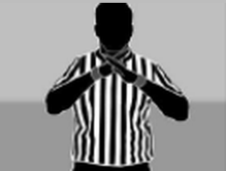
7. Stop the special clock
Injury, blood, or recovery time is finished.
Signal the timer to kill that clock. Then decide whether they wrestle again or the match is over. Do not leave the timer guessing which clock you meant.
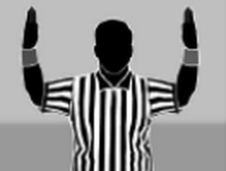
8. Neutral position
The next start is on the feet, with nobody in control.
Show neutral so both wrestlers and the table know the restart is standing. Use it when a choice is neutral, or when you bring them back to their feet.
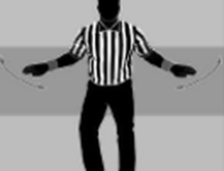
9. No control
The scramble ended with neither wrestler in control.
Show it so the table does not invent a takedown. Hold the signal long enough to be read, then move them to the restart you want.
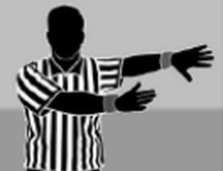
10. Out of bounds
The action left the wrestling area.
Whistle as they leave the area, then show out of bounds toward the table. If a score happened on the way out, award that before you restart.
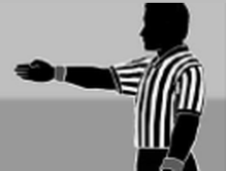
11. This wrestler has control
Name the wrestler who has control.
Point with the hand that matches that wrestler's ankle band, red or green. The table should not have to ask which body you meant.
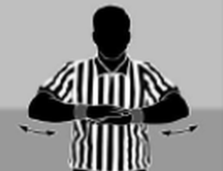
12. Defer the choice
The wrestler who earned the choice is saving it.
Show defer and say it. The table should record a saved choice, not a top, bottom, or neutral start.
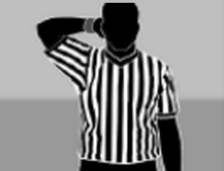
13. Potentially dangerous
The hold is still legal, but it is getting unsafe.
Use the hand on the side of the wrestler in the hold and say it. You are warning them. Stop the match if it turns illegal or someone is actually in danger.
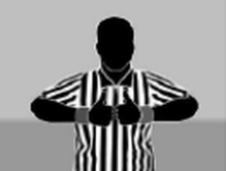
14. Stalemate
Neither wrestler can improve the position.
Stop the match and show stalemate. Bring them back to the same kind of position they were in. It is a restart, not a penalty.
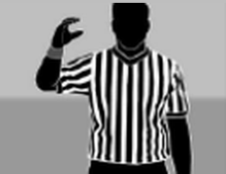
15. Caution
A false start or a bad setup.
Stop, show the caution on that wrestler's side, and say it. Treat the first one as a caution and know what the next one costs before you start them again.
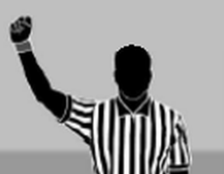
16. Stalling
That wrestler is not working to score or to improve.
Use the hand on that wrestler's side. Square up, make the signal big enough for the table, and say the color before you restart.
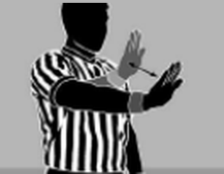
16a. Pushing an opponent out
A wrestler shoved the opponent off the mat.
Signal on the side of the wrestler who did the pushing. Same idea as the pull: show it, say it, then restart.
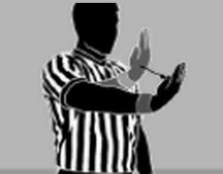
16b. Pulling an opponent out
A wrestler dragged the opponent off the mat.
Signal on the side of the wrestler who did the pulling. Name it out loud. It is separate from a normal out-of-bounds stop.
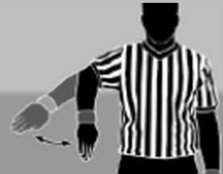
16c. Backing out
On their feet, a wrestler is leaving the mat to avoid wrestling.
This is a neutral stall, not an ordinary out of bounds. Show the backing-out signal on that wrestler's side and say the call so the table does not score a plain exit.
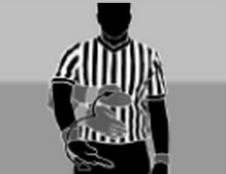
16d. Still wrestling on the way out
They were working when they left the mat. No stall.
Show the engaged signal so everyone knows this exit is action. Do not hang a stall signal on a wrestler who was still trying to score.
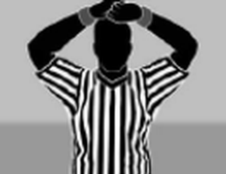
17. Locked hands or grabbing the uniform
Hands were locked around the body, or someone grabbed the uniform.
Show the signal with the hand of the wrestler who did it, and say which one it was. The table has to be able to tell locked hands from a grab.
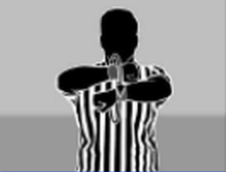
18. Reversal
The wrestler on the bottom came out on top.
Show the reversal, then award the points with the scoring wrestler's hand. Hold the points up until the scorer has them.
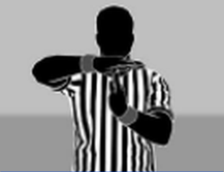
19. Technical violation
A procedural foul, not a hold on the body.
Stop when the situation calls for it. Show the signal on that wrestler's side, say it, then award the point with the opponent's hand.
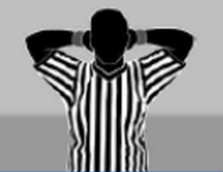
20. Illegal hold
The hold itself is not allowed.
Stop the match. Show the illegal-hold signal on that wrestler's side, name the hold, then award the penalty point to the opponent.
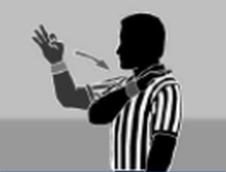
21. Near fall
Back points are building.
Count out loud where the wrestlers and the table can hear you. The near-fall picture on the sheet is the circle made with the hand. When the count ends, award the points with the scoring wrestler's hand. Do not make the table guess the count.
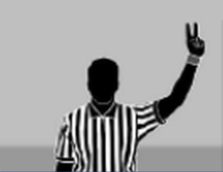
22. Awarding points
These points belong to this wrestler.
Use fingers only. Match the hand to the scoring wrestler's ankle band. Hold the hand high toward the table and say the points.
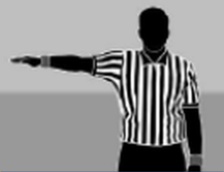
23. Unsportsmanlike conduct
Behavior that crosses the line during the match.
Stop if you need the match stopped. Show the signal on that person's side, say the color, and award whatever the penalty sequence calls for.
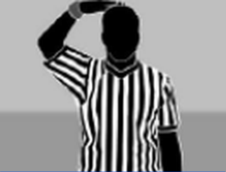
24. Flagrant misconduct
The act is serious enough to remove the wrestler.
Stop the match, show flagrant misconduct, and tell the table who is out and how the match ends. Do not rush past the signal.
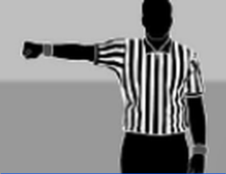
25. Coach misconduct
A coach's behavior is being penalized.
Show the signal toward that bench and say the color. The table has to see it, not only the coach you are talking to.
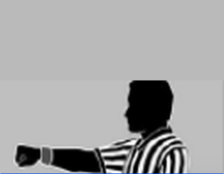
26. Unnecessary roughness
It was wrestling, but it was too rough.
Stop, show the signal on that wrestler's side, and say it so nobody hears it as an illegal hold. Then award the penalty point.
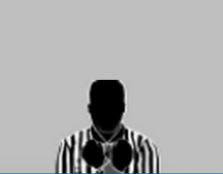
27. Default, technical fall, or disqualification
The match is over without a pin or a time-limit decision.
Signal the ending the table should write down, name the winner, and confirm the reason before you leave the mat.
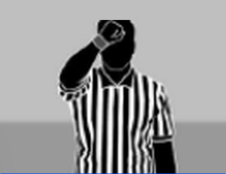
28. Head, neck, or cervical evaluation
A special clock for a head, neck, or spine check.
Stop immediately. Signal the timer to start that evaluation clock. Do not restart until the check is finished and it is safe.
Overtime Cheat Sheet
Only go to the next step if the score is still tied. A fall ends the match in any overtime period (6-7-1).
1. Sudden Victory
- Start: Neutral. No rest after the 3rd period.
- Choice: No choice. Both wrestlers start neutral.
- Winner: First point(s) wins. A fall ends it anytime.
NFHS 6-1-3, 6-7-1
2. Tiebreaker 1
- Start: Referee flips the disk.
- Choice: Disk winner picks top, bottom, or defer.
- Winner: Wrestled to completion. Score is kept like a regular period.
NFHS 6-7-1
3. Tiebreaker 2
- Start: The opponent gets the choice.
- Choice: Opponent picks top or bottom (no defer listed).
- Winner: Most points across the two tiebreakers wins.
NFHS 6-7-1
4. Ultimate Tiebreaker
- Start: Only if still tied after both tiebreakers.
- Choice: 1) Opponent of a wrestler with an unsportsmanlike penalty, else 2) first point(s) in regulation, else 3) disk flip. Pick top, bottom, or defer.
- Winner: First point(s) wins. No score: offensive wrestler wins, +1 match point.
NFHS 6-7-1, 9-1-8
Glossary
FCW study definitions, not rule-book text.
Ankle band
The red or green band on a wrestler's ankle. It tells the table which wrestler is which. When you award points, use the hand on that same side.
Assistant referee
The second official, usually on the edge. The assistant helps with the line, the clock, and what the referee on the mat cannot see.
Blood time
A separate clock used while bleeding is being taken care of. It is not the match clock and it is not injury time.
Boundary
The edge of the wrestling area. Action that goes past it is out of bounds, and the match clock stops.
Bout
One match between two wrestlers.
Caution
A warning, often for moving early or setting up wrong. Say it and show it. Know what the next step costs before you restart.
Choice
After earning it, a wrestler picks how the next period starts: top, bottom, neutral, or a saved choice.
Coach misconduct
A penalty for a coach's behavior. Signal it toward that bench so the table, not only the coach, can see it.
Control
The wrestler who is directing the opponent, usually from behind or from on top. If nobody has it, do not award a takedown.
Default
The opponent wins because a wrestler cannot keep wrestling. Tell the table why, and who won.
Defer
Saving a choice instead of using it right away. Show it and say it so the table does not record a position.
Disqualification
The wrestler is removed and loses. The reason might be misconduct or failing something required to compete, such as weight. Name the reason for the table.
Dual
A meet between two schools or two teams, bout after bout.
Escape
The wrestler on the bottom gets free and both end up neutral. It is a score. It is not a reversal, because the bottom wrestler did not finish on top.
Fall
A pin. Both shoulders are on the mat long enough for the referee to finish the count. The match is over.
Flagrant misconduct
Serious misconduct. The wrestler is out of the match. Stop, show the signal, and make the ending clear to the table.
Forfeit
A win awarded because the opponent does not appear or cannot compete. It is not the same thing as a pin.
Headgear
The ear covering a wrestler wears. A problem with it can stop the match. It is not a reason to invent a penalty.
Illegal hold
A hold the rules do not allow. Stop it, show the signal on that wrestler's side, and award what the penalty calls for.
Injury time
The clock used while an injured wrestler is being looked at. It is separate from the match clock, blood time, and recovery time.
Mat
The wrestling surface. Know where the line is before the first whistle, including cones or tape if the circle is marked that way.
Near fall
Back points while a wrestler is in danger of being pinned. Count out loud. The longer the danger lasts, the more the score can build. Then show the points.
Neutral
Both wrestlers on their feet, neither in control. A neutral start is a standing start.
Official
The referee responsible for the match: the whistle, the signals, the score, and the safety of the wrestlers.
Out of bounds
The action left the wrestling area. Whistle it, show it, and award any score that was earned on the way out before you restart.
Overtime
Extra wrestling when the score is tied at the end of regulation. Restart the way the overtime sequence says, and keep the table with you.
Penalty
What a violation costs. It may be a warning, a point, or a step that ends the match. Signal the foul first, then the points.
Potentially dangerous
A hold that is still legal but close to unsafe. Say it and show it on that wrestler's side. Stop the match if it becomes illegal or someone is in danger.
Random draw
The weight class picked at random to start a dual, so the same class does not lead off every time. The rest of the lineup follows from there.
Recovery time
A short clock a wrestler can get to recover, separate from injury time and from the match clock. Signal the timer so the right clock runs.
Referee's position
The start with one wrestler down on the mat and the other on top. It is not a neutral start.
Reversal
The wrestler on the bottom gets free and finishes in control on top. Show the reversal, then the points, with the scoring wrestler's hand.
Riding time
Time one wrestler spends in control, used as a score in college wrestling. High school folkstyle does not put riding time on the scoreboard. Do not signal it there.
Scorer
The table worker who writes the points. Points go on the sheet when your hand is up and the call is clear, not when a coach yells them.
Stalemate
Neither wrestler can improve. Stop it, show stalemate, and restart them in that same kind of position. Nobody is penalized.
Stalling
Not working to score or to get out. Call it on the wrestler who is holding the match up, show that side's hand, and say the color.
Starting lines
The marks where the wrestlers set their feet or their hands and knees before the whistle.
Takedown
From a neutral start, a wrestler gains control and holds it. If control never arrives, there is no takedown.
Technical fall
The match ends on a big point lead, before a pin and before time runs out. Confirm the score with the table and signal the ending.
Technical violation
A procedural foul, such as locked hands or grabbing the uniform, rather than a hold on the body. Say which one it was.
Tiebreaker
The way a match that is still tied gets a winner after regulation. Follow the sequence your association uses and tell the table which step you are on.
Timer
The table worker who runs the match clock and the special clocks. Your signal tells that person which clock to start or stop.
Unnecessary roughness
Hard wrestling that went too far. It is not the same call as an illegal hold. Say it that way when you signal it.
Unsportsmanlike conduct
Behavior that shows up an opponent, a coach, or the event. Signal it on that person's side and say the color.
Weight class
The weight group a wrestler competes in. A dual moves through the classes. A tournament brackets them.
Whistle
How you start and stop. Blow it so the wrestlers and the timer hear it, then show the signal that explains why.
Ask Dale
Send a rules or career question. The best questions may be answered on the podcast or in the newsletter.